Money tool
Moon Sweepers Money & Cycle Tool
Compare two complete, measured cleanup cycles. See income rate, time spent between shipments, whole-cycle session return and estimated payback together.
A → B / Same units, fair comparison.
Compare cycles
Use the same dust and money units for both setups.
Enter both complete cycles, the change cost and session length, then compare.
No measurements are sent anywhere.
How this is calculated
Cycle timeT = Cleaning time · seconds + Travel time · seconds + Handling time · seconds
Dust per hourDust per load × 3600 ÷ T
Money per hourPayout per shipment × 3600 ÷ T
Cleaning / travel / handlingCleaning time · seconds ÷ T; Travel time · seconds ÷ T; Handling time · seconds ÷ T
Additional money per hourB − A (Money per hour)
Income rate change100 × (B − A) ÷ A (Money per hour)
Estimated payback · minutes60 × One-time cost of change ÷ (B − A)
Completed cycles⌊ Session length · minutes × 60 ÷ T ⌋
Session return after costCompleted cycles × Payout per shipment − One-time cost of change (B)
Session differenceB − A (Session return after cost)
Payback uses the extra income of B over A. Zero cost is immediate; a positive cost requires a positive income difference.
Compare the absolute change when the starting income is zero.
Hourly rates assume a steady repeat. Session returns count whole cycles only.
Measure from cleaning to payment
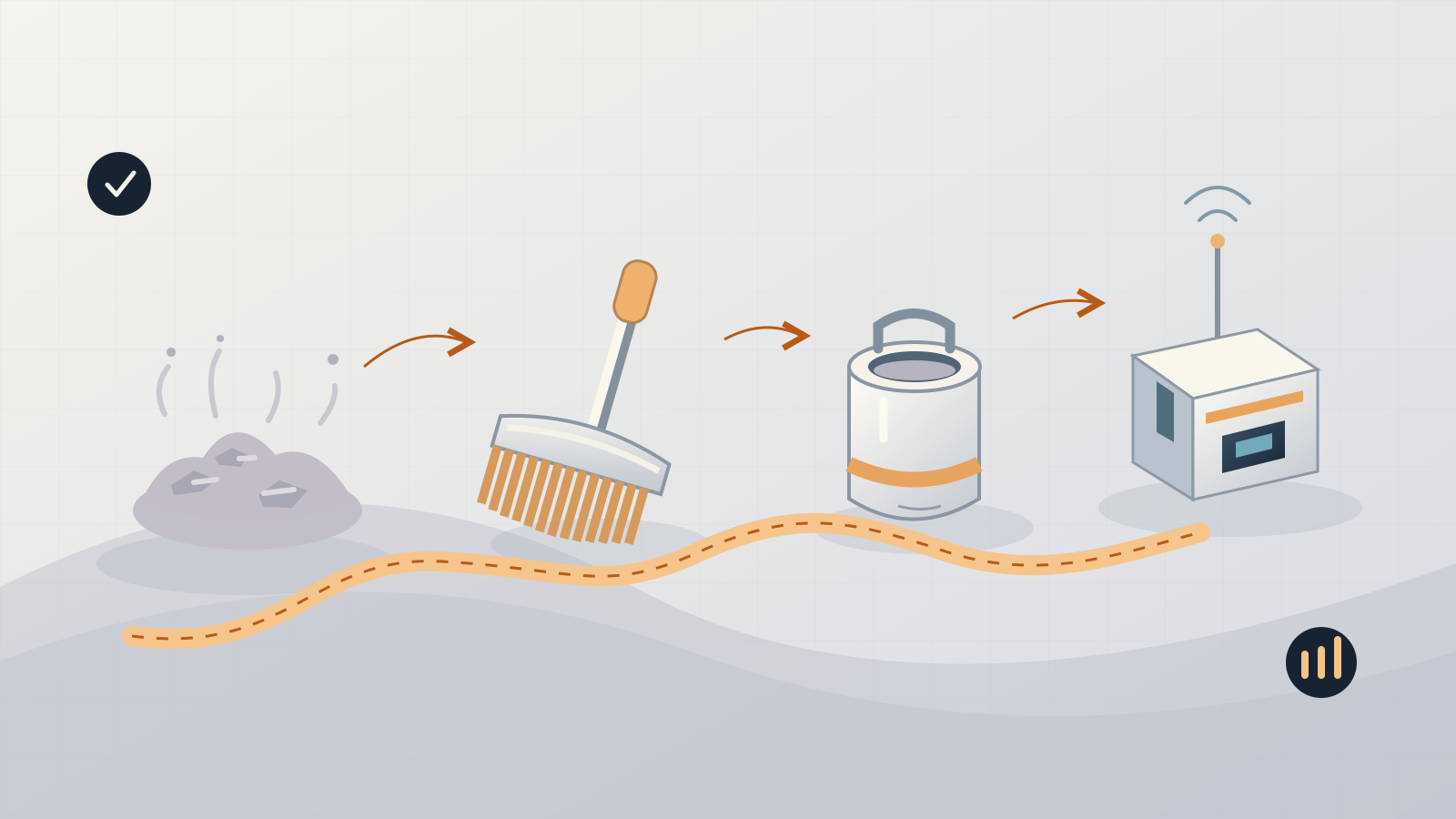
Track one complete cycle: collect a load, deliver it and complete the shipment. For each setup, enter dust amount, cleaning seconds, travel seconds, handling seconds and the payout you actually saw. Use the same units on both sides. Handling includes whatever time your route spends unloading, launching or waiting before the next cycle.
Compare a tool change, a different load size or a delivery layout with the same method. The hourly figure normalizes complete cycles to an hour; the session figure counts only whole cycles completed within your chosen time and subtracts the one-time cost.
Measurement reference
| Measurement | Unit | What to include |
|---|---|---|
| Dust per load | Your dust unit | Amount delivered for the recorded payout. |
| Cleaning time · seconds | seconds | Time spent collecting that load. |
| Travel time · seconds | seconds | All travel between the work area and depot in this cycle. |
| Handling time · seconds | seconds | Unloading, launching and waiting in this cycle. |
| Payout per shipment | Your money unit | Actual payment for the completed shipment. |
Read the trade-off
A higher hourly rate can still leave less money in a short session after an expensive change. Check session return beside estimated payback. Repeat the measurement if terrain or interruptions changed substantially. The comparison uses your inputs and a steady repeating cycle; it does not assume an item price or a universal dust value.
Common questions
Does the tool assume a dust sale price?
No. Enter the payout from each completed shipment; both runs can use different payouts and load sizes.
Can I use this to plan automated selling?
Time the working setup you have, including delays and handling. Public discussion headings raise automation questions but do not establish a verified setup or fix.
Why can a faster cycle lose money this session?
A short session may not repay the initial cost. The session comparison subtracts that cost and counts only completed cycles.